

The pattern today was not about the sector. It was about clarity. SiFive made the compute roadmap feel urgent. AfterQuery turned expert data collection into a live infrastructure need for AI labs. Portal sold maneuverability in space as a missing capability, not a nice-to-have. Rork made app creation feel less like software development and more like a shortcut for distribution. Sigma Automate kept the pitch even tighter: enterprise IT is still buried in manual complexity. Different categories. Same move. The strongest rounds made the broken workflow obvious and the next step easy to underwrite.
If you’re raising now, do not start with the market map. Start with the drag. Show what slows down, what costs too much, or what the current stack still cannot do. Then show exactly what this round changes. That sequence is still easier to believe than a broad future-state pitch.
The same rule applies outside fundraising too: the teams that win usually spot the bottleneck first. tvScientific’s State of Performance TV 2026 report breaks down where marketers are feeling pressure now and why more of them are shifting spend toward measurable TV.
2026’s biggest media shift

Attention is the hardest thing to buy. And everyone else is bidding too.
When people are scrolling, skipping, swiping, and split-screening their way through the day, finding uninterrupted moments where your audience is truly paying attention is the priority.
That’s where Performance TV stands out.
Check out the data from 600+ marketers on the most effective channels to capture audience attention in 2026.


SiFive raised $400M by making compute infrastructure feel unavoidable
SiFive announced an oversubscribed $400 million Series G led by Atreides Management, with participation from Apollo Global Management, NVIDIA, Point72 Turion, T. Rowe Price Investment Management, Prosperity7 Ventures, and Sutter Hill Ventures. The company is not just selling chip IP. It is selling a way to push high-performance RISC-V further into data-center workloads at a time when the compute stack is being rebuilt. See full article.
What this means for your raise: Infrastructure companies win when they explain why the stack cannot stay where it is. If the old architecture is the bottleneck, make that the headline.

AfterQuery raised $30M by turning expert input into a hard AI bottleneck
San Francisco-based AfterQuery raised a $30 million Series A at a $300 million valuation, led by Altos Ventures with The Raine Group, Y Combinator, and BoxGroup also backing the round. The pitch works because it is not “better AI data” in the abstract. It is a faster way for labs to get high-quality expert training data tied to real-world problems. See full article.
What this means for your raise: If your product sits one layer beneath the obvious product category, lean into that. Founders sound more credible when they explain the enabling constraint, not just the flashy outcome above it.

Portal raised $50M by selling mobility, not just spacecraft
Bothell-based Portal Space Systems raised a $50 million Series A led by Geodesic Capital and Mach33, with Booz Allen Ventures, AlleyCorp, and FUSE participating. GeekWire’s reporting makes the wedge clear: Portal is building spacecraft designed for rapid maneuvers, which turns “space vehicle” into a much sharper capability story around speed, logistics, and orbital flexibility. See full article.
What this means for your raise: Hardware stories get stronger when you sell the missing capability, not the object itself. Investors fund a better outcome faster than they fund a better label.

Rork raised $15M by collapsing the distance between idea and app
San Francisco-based Rork announced a $15 million seed round led by Left Lane Capital, with Peak XV, True Ventures, Goodwater, and a16z Speedrun also participating. The company is pitching natural-language app building for the App Store, but the sharper story is speed: turning more consumers into software builders without requiring them to become engineers first. See full article.
What this means for your raise: If your product reduces the number of steps between intent and output, do not bury that. Speed-to-result is often the real buyer value, even when the category sounds crowded.

Sigma Automate raised $2.75M by staying close to IT pain teams already hate
Sigma Automate launched with $2.75 million in funding led by Glasswing Ventures, plus unnamed angel investors. The company is going after hybrid IT complexity with no-code automation, configuration drift detection, and one-click remediation, which is a much tighter story than generic “AI for enterprise operations.” See full article.
What this means for your raise: You do not need the biggest market if the current workflow already sounds miserable. The clearer the operational pain, the less category inflation you need.

Which “unavoidable” bottleneck story would you lead with first?


A lot of founders answer investor questions one by one and never connect them back to the same core point. That is a mistake.
You need one sentence that keeps showing up in the deck, the memo, and the meeting:
This round matters because it lets us go from [current proof] to [next proof] without changing the story.
Then build around it.
Use this structure:
We’ve already proven [something real].
Now we need to prove [next milestone].
This round is the bridge between those two points.
Example:
We’ve already proven buyers care enough to adopt the product.
Now we need to prove the product expands cleanly across larger accounts.
This round is what gets us from early pull to repeatable scale.
WHY THIS WORKS
That framing works because it gives the investor a straight line from capital to consequence. You are not asking them to fund “more time.” You are asking them to fund one visible step forward.

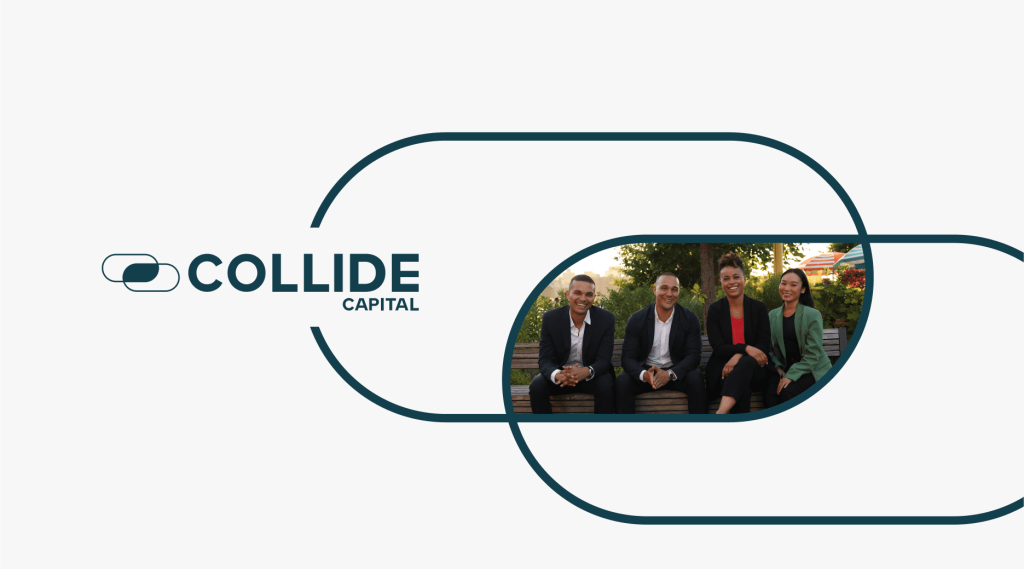
Collide Capital is worth knowing if you are raising at the early stage and building in fintech, supply chain, or future of work. The firm announced today that it closed an oversubscribed $95 million Fund II, bringing total AUM to more than $170 million. Collide says it invests from pre-seed through Series A, typically writes $1 million to $3 million checks, and applies a Gen-Z buyer lens in future-of-work deals. Its site also says it has backed 75+ companies and highlights portfolio names including Butter Technologies, Emtech, Rheaply, Slang.ai, 4Degrees, and Finix. Best path in is direct: Collide’s site has a public “Pitch us!” form, and it also lists [email protected] for people who want to stay close to future opportunities.

The best rounds do not just sound exciting. They sound inevitable. Reply with your opener or memo, and I’ll tell you where the story still needs to earn that feeling.

I'm Marcus Cole. I spent four years on the investor side at a $200M seed fund in New York, reviewing 800+ decks a year, sitting in partner meetings, watching founders win and lose at the table.
Then I crossed over. Raised $4.2M across two companies. One got acqui-hired after a $1.4M raise. The other raised $2.8M seed and is still running.
I've been in your seat and theirs. Capital Raise is what I wish I'd had while raising: straight talk, no waste, built for founders who are actually in it.
Disclaimer: Capital Raise is a newsletter for informational purposes only. Nothing in this newsletter constitutes investment advice, financial advice, or a solicitation to invest.
Always do your own due diligence. Consult a licensed financial advisor before making investment decisions.